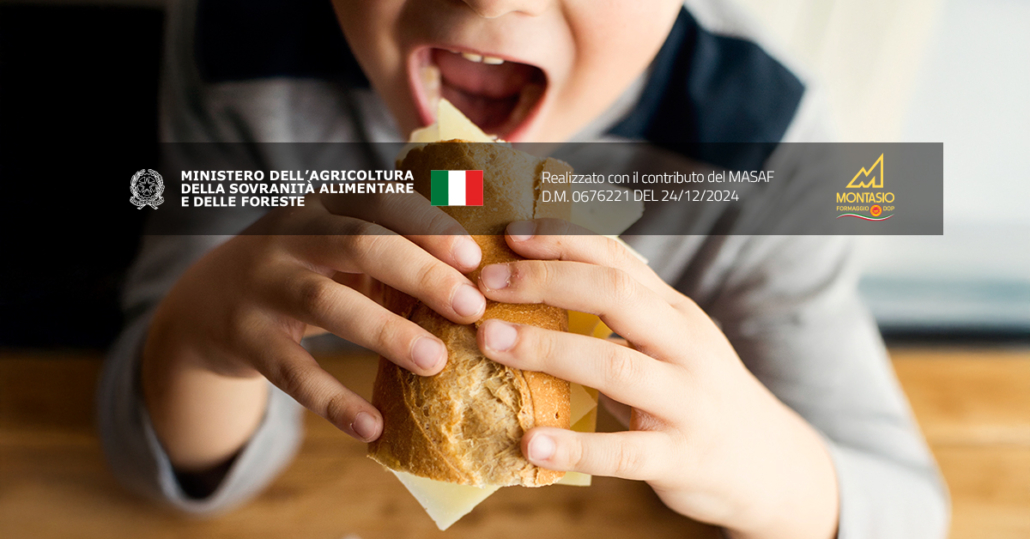


“What should I cook for my kids?” How many times have you asked yourself this question while shopping or planning meals? The ages between 8 and 9 are a period of rapid growth and high energy needs. Your child doesn’t just need to be fed — they need the right fuel to build strong muscles and bones, stay focused at school, and enjoy their everyday activities to the fullest.
Which nutrients are essential? What are the right portions? To answer some of the most common questions, the team of nutritionists from the University of Udine, in collaboration with the Montasio PDO Cheese Consortium, has developed a daily menu that follows the latest LARN (Reference Intake Levels) guidelines and ensures the perfect balance between science, taste, and quality.
Essential Nutrients for Children’s Growth
Proper dietary planning for school-aged children is based on rigorous scientific principles, essential for supporting optimal growth and development. Our approach aligns with the most recent LARN recommendations regarding energy and nutrient intake (5th revision, 2024) and relies on the nutritional values from the BDA tables (2022), with a particular emphasis on nutrient quality.
The energy needs of an 8- to 9-year-old child (approximately 1800 kcal/day) should be met through a varied diet that respects the correct distribution of macronutrients. In terms of daily frequency, it is crucial to ensure at least 5 servings of seasonal fruits and vegetables (i.e., 2–3 servings of fruit and 2–3 servings of vegetables) to provide essential fibers, vitamins, and minerals.
Regarding structural macronutrients, carbohydrates should provide 51% of total daily calories, fats 29%, and proteins 16%. These percentages may vary slightly depending on a child’s age and weight, as well as their level of physical activity.
Making meals enjoyable for children
The proposed meal plan includes Montasio PDO cheese in two main meals, favoring the fresh or semi-aged varieties:
– spiedino al Montasio
– tortino di spinaci e Montasio
In this way, by consuming controlled portions of Montasio cheese, it is possible to contribute to an adequate intake of protein, balanced fats, and calcium, while also promoting local food culture from an early age.
The information in this article is intended for educational and informational purposes only. It is not a substitute for professional medical advice or guidance. For a personalized dietary plan suited to your specific needs, health status, or medical conditions, always consult your physician or a qualified nutritionist/dietitian.